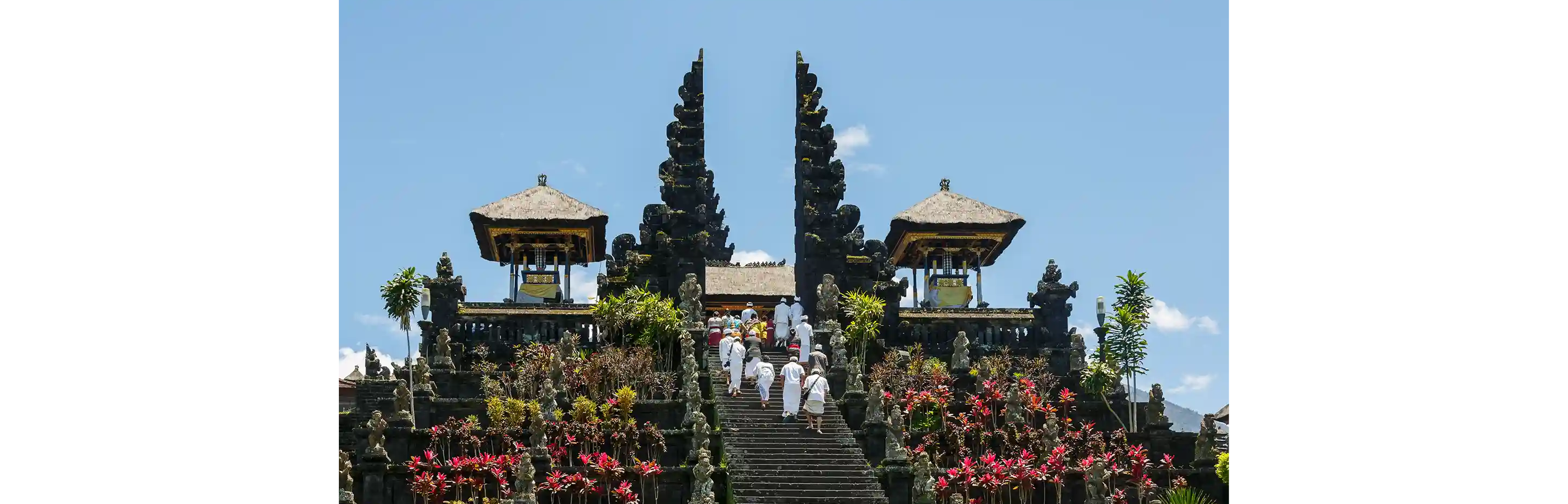
Pura Besakih, Bali’s largest and most sacred temple complex, receives thousands of worshippers and tourists every day. This constant flow of people produces a significant amount of daily waste, primarily generated from ritual offerings known as canang and banten. These offerings are largely organic, made from coconut leaves, flowers, fruit, and food. However, many offerings also contain small wrapped candies or sweets, which introduces non-organic contamination into the organic waste stream.
The Situation Before Improvements
For several years, waste management systems around the Besakih area struggled to cope with the volume of waste produced during daily ceremonies and major religious events. When the local TPS3R facilities were overloaded or not functioning properly, mixed waste was transported or pushed toward the nearby ravines and cliffs behind the temple complex.
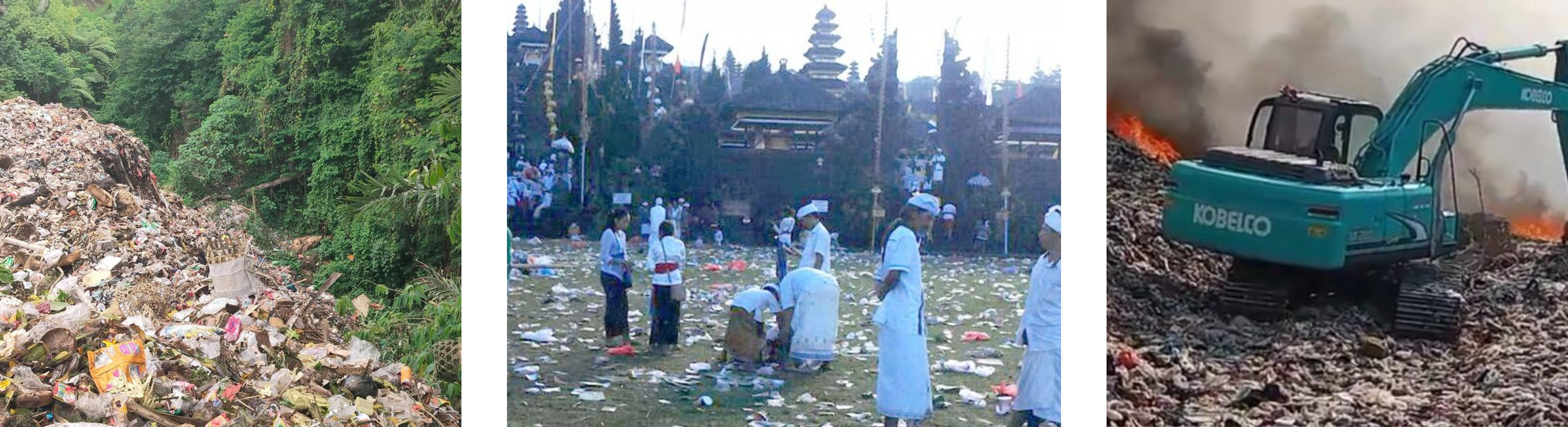
Multiple Indonesian media outlets documented this situation, highlighting how waste accumulated in sacred areas and along steep cliff edges:
- Liputan6 reported that waste from Pura Besakih was dumped into ravines when TPS3R facilities failed to operate effectively.
- TheEast.co.id published images showing piles of unmanaged waste accumulating near the temple area.
These reports clearly illustrated a systemic issue: high waste volume, limited sorting capacity, and a lack of appropriate processing tools.
TPS Basaki Lestari: Building a More Functional System
To address these challenges, a community-based waste management facility called TPS Basaki Lestari began upgrading its operations. The facility serves the Pura Besakih area and focuses on managing waste generated from temple activities and surrounding communities.
As part of this effort, TPS Basaki Lestari invested in several machines supplied by Wedoo, designed specifically to support organic waste processing at scale:
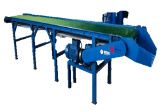
- Two flat sorting conveyors (each approximately 4 meters long and 60 cm wide)
- An organic waste crusher
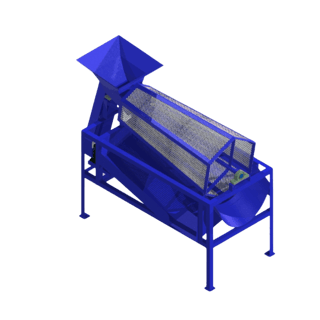
- An organic waste siever (screening machine)
- An organic waste pelletizer
The objective was not only to reduce the volume of waste but also to recover value from organic materials that would otherwise be discarded.
Understanding the Waste Stream at Pura Besakih
Based on daily observations at TPS Basaki Lestari:
- Around 80 percent of the waste generated is organic.
- Approximately 20 percent consists of non-organic contamination, primarily candy wrappers hidden inside offerings.
- The contamination is small, lightweight, and difficult to detect without proper sorting infrastructure.
Manual sorting on the ground is slow, physically demanding, and inconsistent. This is why mechanical assistance plays a critical role in ensuring clean separation at the beginning of the waste management process.
The Role of Wedoo’s Machinery in the Waste Management Process
Sorting Conveyors: Enabling Accurate Separation
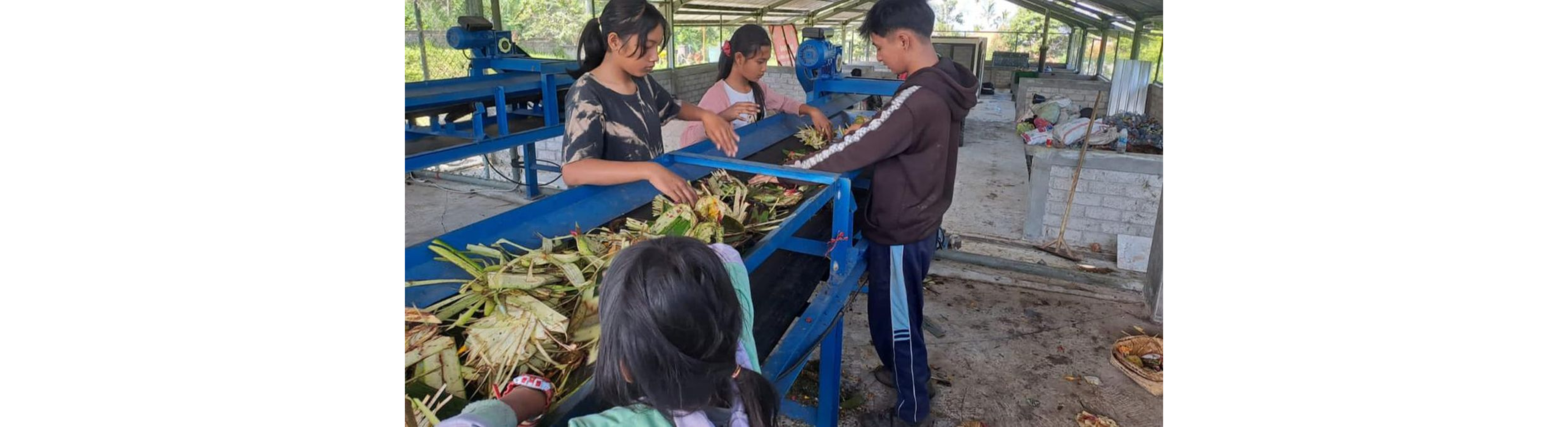
TPS Basaki Lestari uses two Wedoo flat conveyors as the first step in processing incoming waste. These conveyors elevate waste to an ergonomic working height and create a continuous sorting flow.
The conveyors allow workers to:
- Identify and remove candy wrappers embedded within organic offerings
- Sort waste more accurately and consistently
- Work more efficiently with reduced physical strain
- Prevent plastic contamination from entering downstream machines
This step is essential. Proper separation at the conveyor stage determines whether the organic material can be successfully composted or pelletized.
Organic Waste Crusher: Reducing Size and Increasing Efficiency

After sorting, clean organic waste enters the Wedoo organic crusher. This machine shreds leaves, flowers, fruit remnants, and coconut fibers into smaller, uniform pieces.
The crushing process:
- Reduces waste volume significantly
- Improves moisture distribution
- Accelerates microbial activity during composting
- Prepares material for screening and pelletizing
Smaller particle size allows aerobic bacteria to digest organic material more efficiently, resulting in faster and higher-quality processing.
Siever / Screening Machine: Ensuring Uniform Output
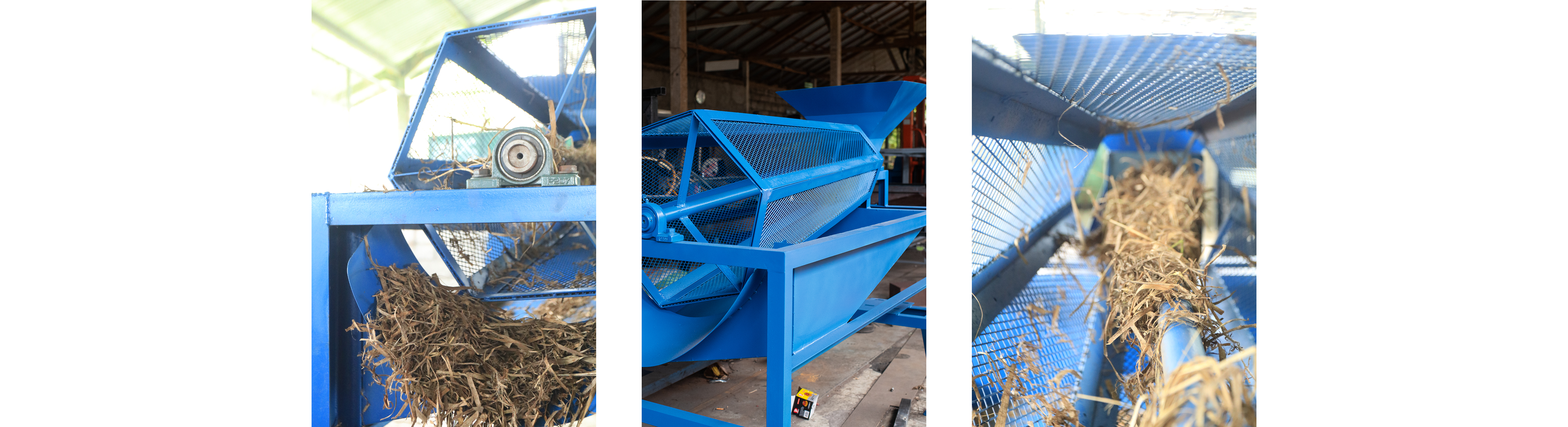
The crushed material is then passed through an organic siever. This screening process separates particles by size and ensures consistency.
The siever:
- Separates fine and coarse organic material
- Returns oversized particles for re-crushing
- Captures any remaining non-organic fragments
Uniform particle size is critical for producing stable compost and high-quality pellets.
Organic Pelletizer: Transforming Waste Into Value

After screening, the organic material is fed into a Wedoo pelletizer. Through controlled pressure and heat, the machine compresses the material into dense pellets.
These pellets can be:
- Used as supplementary feed for livestock such as pigs, cows, and chickens
- Utilized as biomass fuel
- Stored and transported more easily than loose compost
Pelletizing represents a high-value recovery pathway, converting organic waste into a stable and usable product.
Why the Right Tools Matter in Waste Management
Many waste management systems fail not because of poor intent, but because they lack appropriate tools. Without conveyors, crushers, screens, and pelletizers, organic waste remains contaminated and unusable.
Wedoo’s machinery enables TPS Basaki Lestari to:
- Increase sorting accuracy
- Improve worker safety and efficiency
- Recover value from organic waste
- Reduce reliance on landfills and ravines
- Build a more circular waste system
Technology transforms waste from a liability into a resource.
Sustainability Efforts at Pura Besakih
In parallel with improvements at TPS Basaki Lestari, several sustainability initiatives have been introduced at Pura Besakih:
- A ban on single-use plastic inside the temple complex, as reported by Mongabay Indonesia.
- Government-backed waste management initiatives such as Sukla: Mahayuning Loka Bali, reported by MetroTV News.
These initiatives aim to reduce waste generation while improving how waste is handled once produced.
There have been informal reports suggesting that compost produced in the Besakih area is distributed to local farmers. However, there is currently no publicly verified documentation confirming consistent compost distribution specifically from TPS Basaki Lestari.
With proper documentation in the future, this could become an important extension of the circular economy created by the facility.
The waste challenges surrounding Pura Besakih demonstrate the importance of pairing cultural traditions with modern waste management solutions. Through TPS Basaki Lestari and the integration of Wedoo’s sorting conveyors, crushers, sievers, and pelletizers, organic temple waste can be processed effectively instead of being discarded into ravines.
This case shows how appropriate tools enable communities to protect sacred environments, recover value from waste, and move toward cleaner and more sustainable systems that can be replicated in other cultural and religious sites across Indonesia and beyond.