On Batam Island, Seven Clean Seas turned messy, UV-brittle ocean plastics — mostly low-value film like plastic bags (LDPE/HDPE) — into useful, locally produced building materials. Wedoo supplied the processing equipment and technical support that made their circular workflow (collect → sort → melt + compound → mould) reliable at island scale. The result: hazardous asbestos roofs replaced with durable plastic roof plates, new community products (furniture, bricks), local jobs, and verified tonnes of plastic permanently diverted from the environment.
The problem: islands, ocean plastic, and limited waste markets
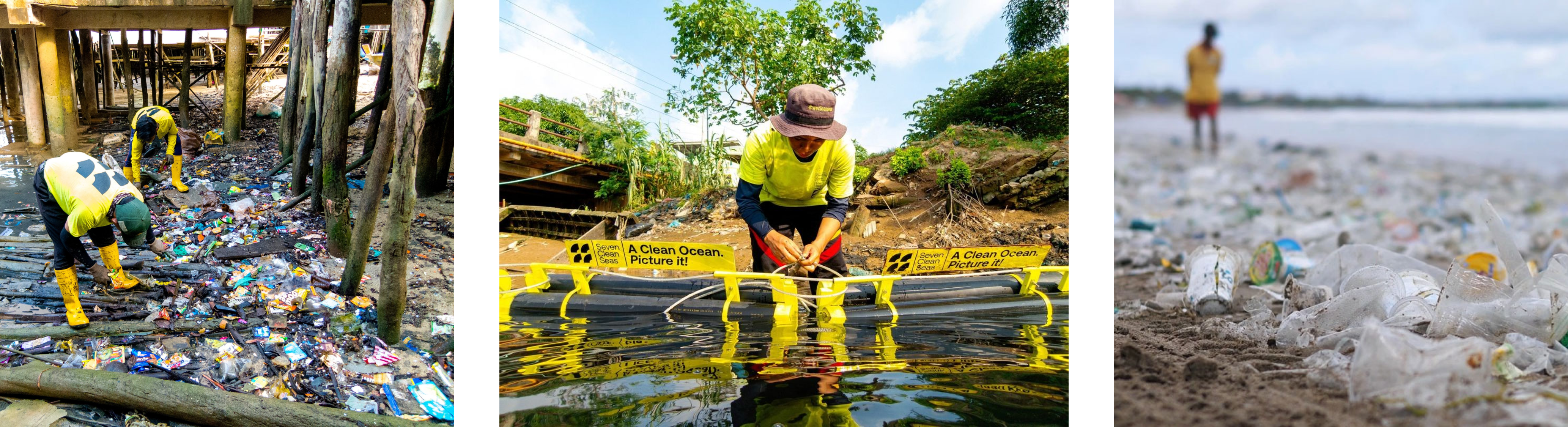
Batam is an industrial island with serious ocean-bound waste inflows and limited formal disposal or recycling markets. Much of the material retrieved by coastal and river cleanups is low-value film (plastic bags, wrappers) that has been weathered by sun and salt — poor feedstock for standard recycling and costly to ship off-island. Seven Clean Seas’ own analysis shows LDPE (low-density polyethylene) is a recurrent challenge: it averages about 13% of the collected plastic stream yet is widely labelled “non-recyclable” by conventional value chains. Diverting and using this material on site is therefore the only practical route to scale impact on islands. sevencleanseas.com
The idea: close the loop by making building materials from ocean plastics
Seven Clean Seas piloted a circular approach: collect and sort ocean-bound plastics, then reprocess the low-value films into roof plates and construction bricks and higher-value items like furniture and coasters. Replacing asbestos roofs with plastic roof plates also delivers direct community benefit — safer homes and improved health outcomes — while creating a demand for the recycled feedstock, which makes collection financially sustainable. Examples of community re-roofing and small renovation projects have already taken place in Batam. sevencleanseas.com+1
Where Wedoo stepped in
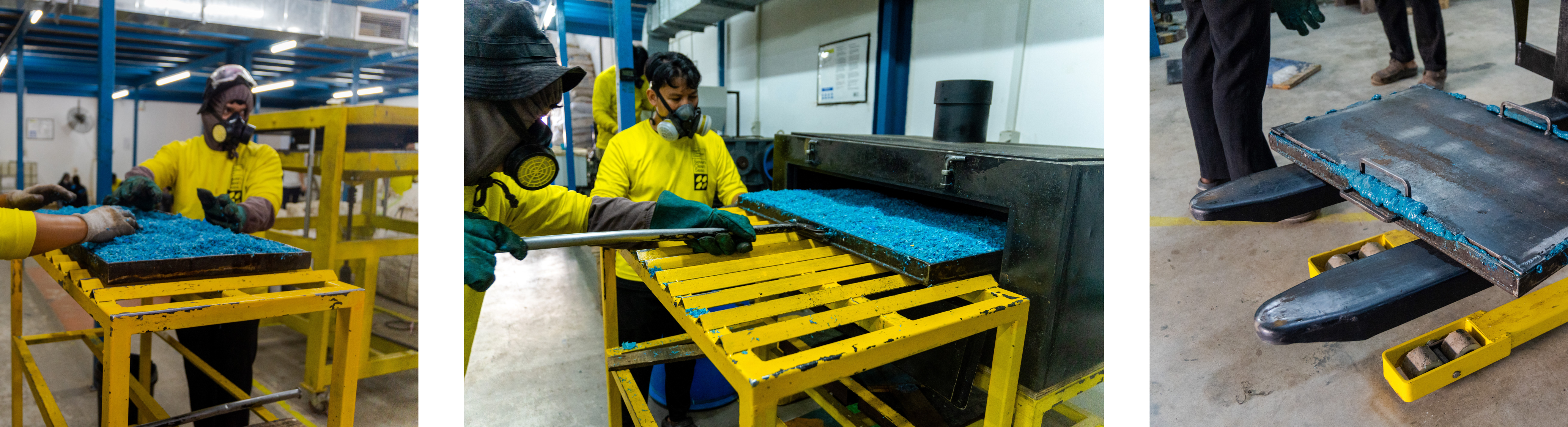
Wedoo worked with Seven Clean Seas to design and deliver the small-to-medium production equipment needed to convert messy film plastics into safe, standardised building products. The key elements:
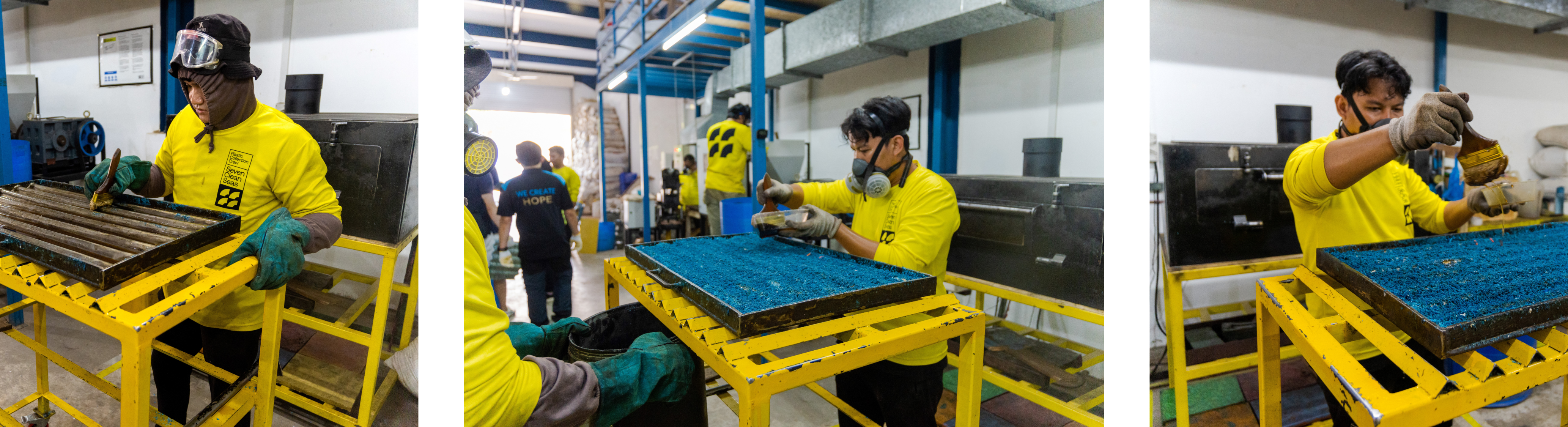
- Industrial oven and extrusion/compounding support — to melt mixed LDPE/HDPE film reliably, we provided ovens and process controls sized for the MRF’s throughput. Because beach-collected film is degraded (variable melt behaviour), the processing line was set up to accept blended feedstock and run at stable temperatures.
- Masterbatch (colour & coupling agents) — to restore mechanical integrity and unify appearance, Seven Clean Seas adds a masterbatch (binding and pigment concentrate) and UV stabiliser into the melt. The masterbatch improves cohesion between degraded polymer fragments and provides consistent colour (explaining the uniform blue roof plates in the field photos). It also contains anti-UV additives so the roof plates withstand sunlight longer. (Terminology note: “masterbatch” is the standard industry term.) sevencleanseas.com
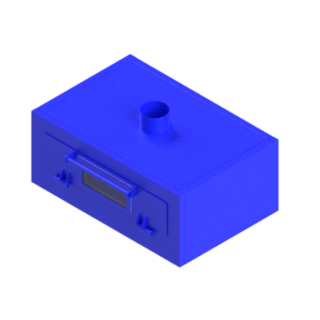
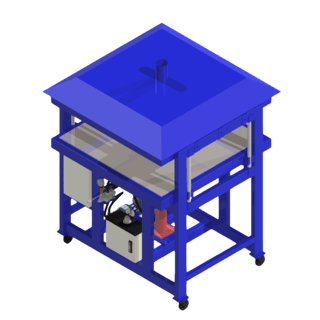
- Sheet press / moulding equipment — WeDo’s sheet-press machines convert pressed melt into flat sheets and moulded roof plates or furniture panels. Some fractions are pressed into furniture (benches, tables) — a high-utility product for small islands where building materials are expensive to import.
- Process training & maintenance — we trained the local MRF teams on operation, troubleshooting, and routine maintenance so production can be sustained with local labour.
Outcome: Two product streams — roof plates (for community re-roofing) and offcuts/panels turned into furniture and bricks — that absorb locally collected plastic and create local value.
Verified impact & data
Seven Clean Seas runs Periscope, a data transparency platform, and pursues third-party certification for traceability and credits. Key verified points:
- The Batam project is Verra PWRS-certified (Plastic Waste Reduction Standard) and audited by Control Union; the project also holds OBP Neutralization and Social+ credentials from Zero Plastic Oceans. These certifications cover traceability, environmental safeguards and social protections. sevencleanseas.com+1
- Verra’s case study on Batam reports that from project launch (Nov 2022) through July 2023 the initiative collected 1,823 tonnes of plastic; the project is expected to collect nearly 20,000 tonnes over its seven-year crediting period. Those collections feed the materials recovery facility (MRF) and the product lines (roof plates, bricks, furniture). Verra
- Seven Clean Seas’ project pages highlight LDPE as a priority stream (≈13% average share of the collected plastic in Batam) and explicitly describe production of standardised roof plates and bricks from recycled LDPE. sevencleanseas.com
I used Seven Clean Seas’ public project pages and Verra’s case study because both provide audited, third-party-backed numbers and program detail. If you want every single line of their waste-audit tables reproduced verbatim, we can extract those from their Periscope or Annual Impact Report — I found those resources linked publicly but some PDFs may require direct download. sevencleanseas.com+1
Why this matters: construction, waste and emissions

Turning plastic into building materials hits two big problems at once:
- Construction is material-intensive — the built environment consumes a very large share of global raw materials and causes a large portion of global emissions. Recent synthesis reports show the buildings and construction sector accounts for roughly 30–40% of global energy-related GHG emissions and consumes a large share of raw materials. Circular interventions in construction can therefore deliver outsized carbon and resource benefits. McKinsey & Company+1
- Construction & demolition waste is huge — globally, construction and demolition waste (C&D) accounts for about 30% (and in some estimates up to 40%+) of total solid waste, with annual C&D waste in the billions of tonnes. Replacing or supplementing conventional building materials with recycled plastic products creates demand to absorb waste on site and reduce landfill and shipping flows. PMC+1
Put simply: if you can take plastic that is already a disposal problem and reliably lock it into long-lived construction elements (roof plates, bricks, benches), you reduce pollution, lower demand for virgin materials, and create local products — all while keeping logistics costs down on islands.
Social value: jobs, safer homes, and local circular economies
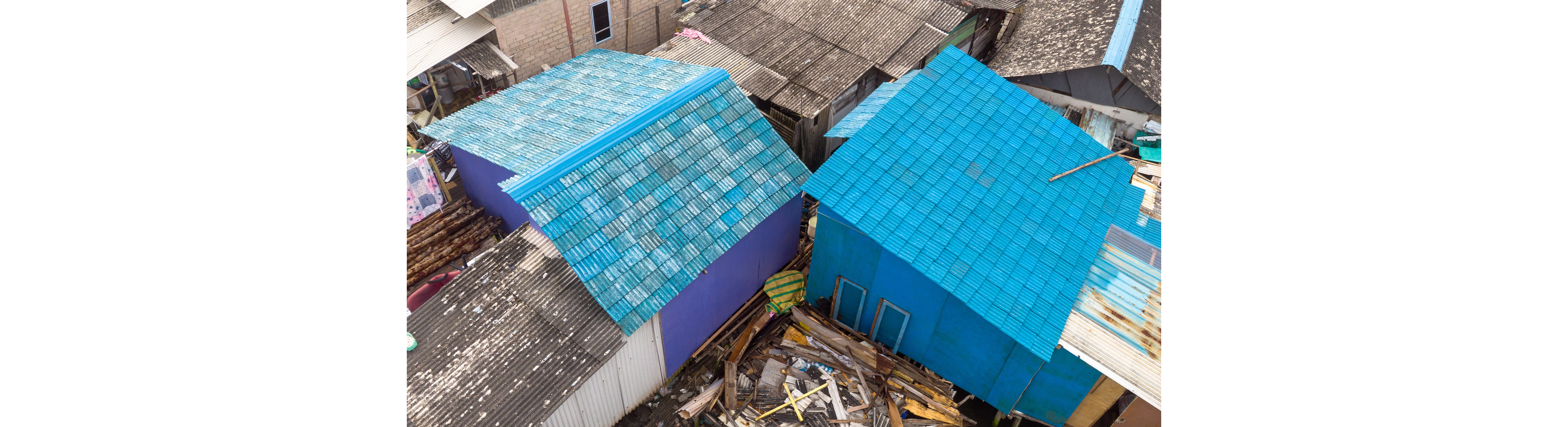
Seven Clean Seas deliberately employs local collectors and pays fair wages; their Social+ and OBP certifications require decent labour conditions, traceability, and audits. Re-roofing projects remove asbestos — a hazardous material — and hand the improved roofs back to households for free or as part of philanthropic projects, which multiplies social and health benefits. sevencleanseas.com+1
Practical lessons from Batam
- Accept the feedstock’s messiness. Beach/river plastic will be degraded and mixed. Plan for variable melt behaviour and invest in process additives (masterbatch + UV stabilisers) and robust mixing. sevencleanseas.com
- Design for local maintenance. Equipment must be maintainable with locally available skills and parts; training is essential. (Wedoo provided training alongside machines.)
- Create demand before scaling collection. Product demand (community roofing, furniture orders) keeps collection financially viable and avoids stockpiling low-value plastics.
- Use certified credits to bridge financing gaps. Verra PWRS and OBP Neutralization provide trust that helps attract corporate buyers and philanthropic funding to scale operations. Verra+1
Numbers at a glance
- 1,823 tonnes collected by Batam project from Nov 2022–July 2023; ~20,000 tonnes expected across a 7-year crediting period (Verra case study). Verra
- LDPE ≈ 13% average share of Batam collections (Seven Clean Seas project page). sevencleanseas.com
- Projects certified/verified: Verra PWRS, OBP Neutralization, Social+ OBP; audited by Control Union. sevencleanseas.com+1
- Global context: the built environment produces roughly 30–40% of global energy-related emissions and construction/C&D waste accounts for roughly 30% (or more) of total solid waste. Circular building materials can therefore materially reduce embodied carbon and landfill pressure. McKinsey & Company+1
Final thoughts — how this can inspire other islands and MRFs
Batam shows a practical model: combine local cleanups, an MRF, modest processing equipment, smart use of additives (masterbatch + UV stabiliser), and product lines aligned to local demand (roof plates, bricks, furniture). For islands the logic is especially strong: shipping untreated waste off-island is expensive and often impossible; turning waste into durable local products reduces costs, closes material loops, and directly improves community resilience.