Munduk Moding Plantation began in 2007, when a five-hectare abandoned coffee plantation in the hills of Munduk was acquired with a vision to create something more than a hotel.
Munduk Moding Plantation (MMP) began as a modest coffee farm in the highlands of North Bali. Over time, it evolved — first offering a few villas and suites, then gradually expanding into a full-scale resort. The growth was not rushed; the expansion respected nature, local culture, and sustainability. Today, MMP stands as a respected eco-resort with a deep commitment to environmental and social responsibility.
A Strong Foundation in Sustainability
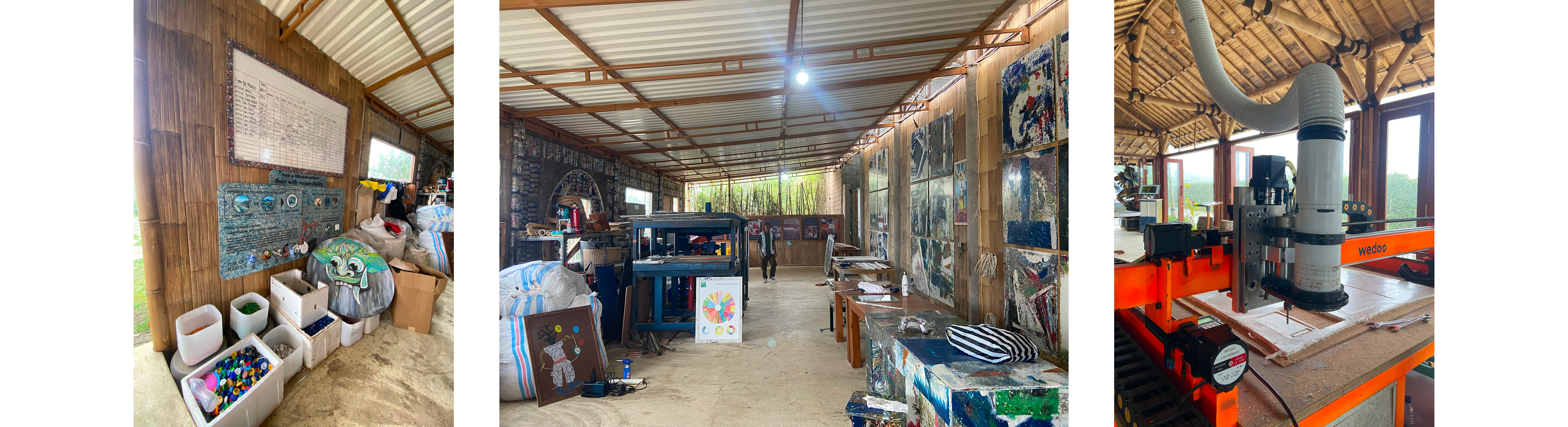
From early on MMP prioritized sustainable practices in resource use, waste management, and community engagement. Their sustainability policy emphasizes recycling, composting, water conservation, and offering guests an opportunity to engage with these practices. Munduk Moding Plantation+2thepunchcommunity.com+2MMP’s “Plastic Recycling Center & Waste Bank” collects plastic waste not only from the resort itself, but also from neighboring communities. Through this initiative, plastic waste is sorted, cleaned, shredded or otherwise processed, and transformed into new products. Among these are furniture, decorative items, hangers, signage, and other practical items used within the resort. Munduk Moding Plantation+2Munduk Moding Plantation+2Organic waste (food scraps, garden waste, etc.) is composted on-site to nourish the resort’s plantation gardens. This diverts waste from landfills and returns nutrients to the land. Munduk Moding Plantation+2instantkarmamag.com+2MMP also banned or significantly reduced the use of single-use plastic and replaced it with alternatives whenever possible. Munduk Moding Plantation+1
From Guest Waste to Usable Products — With Support from Wedoo
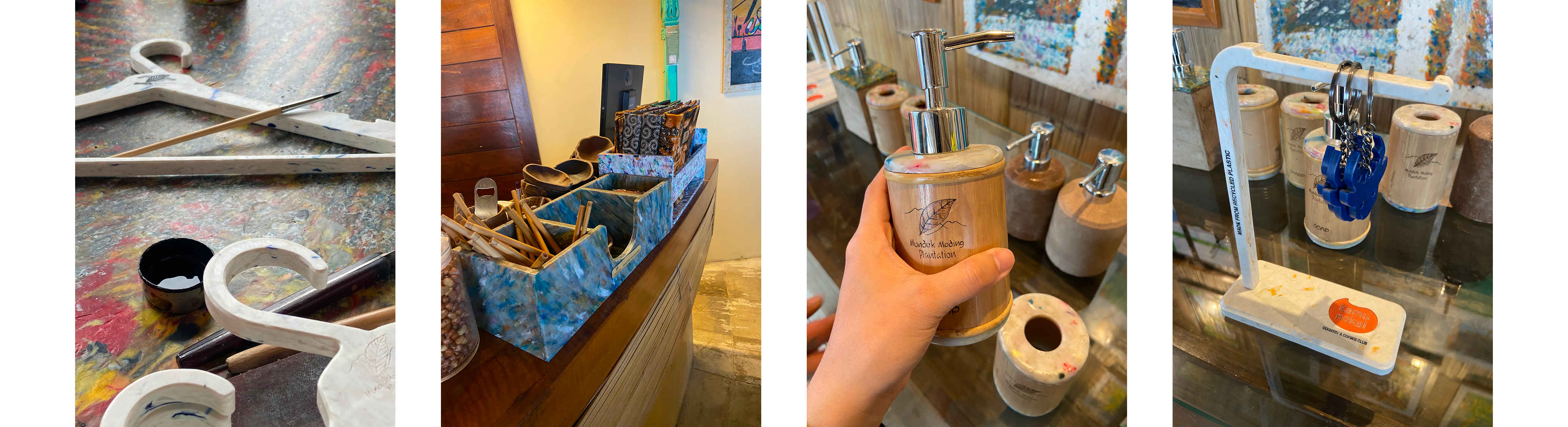
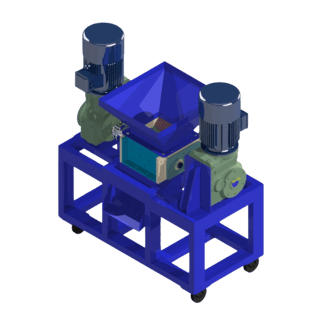
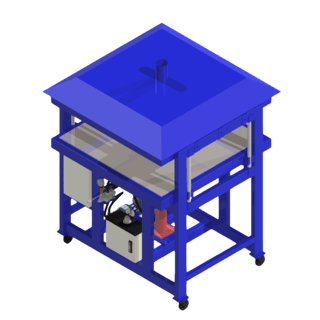
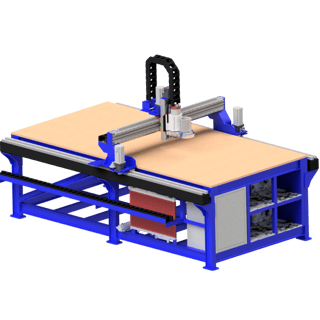
When the MMP team first approached Wedoo Workshop Bali, we assessed their waste profile. At that time, plastic waste produced by the resort alone appeared relatively modest. Wedoo initially proposed a compact, low-volume system similar to those used in smaller-scale operations.However, the MMP management proposed a broader vision: they wanted to process not only their own waste, but also waste collected from an estimated ten surrounding villages. Their aim was to create a community-level recycling hub. Upon this request, Wedoo delivered a full-scale waste-processing solution: a large industrial shredder, sheet-press line, and a CNC machine to process recycled plastic sheets into usable products. This system enabled production of furniture, homeware, signage, and interior furnishings — items for their resort and potentially for sale.With on-site production, MMP reduces dependence on imports. This is especially valuable considering their remote location in North Bali, where transport and logistics can be challenging and costly.
Social Impact: Turning Waste into Education and Cultural Preservation
Beyond environmental benefits, MMP’s recycling initiative supports a creative social program. Through their Waste Bank program, community members — including families from surrounding villages — are invited to bring sorted plastic waste to the recycling center.In exchange for plastic waste, MMP offers children free classes: English lessons and traditional Balinese dance lessons. Many of these classes are led by MMP staff themselves. This model replaces cash-based “waste-for-money” schemes common in typical “waste bank” systems. Instead, the incentive is educational and cultural: a way to invest in children, their future, and their appreciation for local heritage.This approach helps ensure that waste collection is motivated by positive community engagement, not just short-term cash incentives. It transforms environmental responsibility into a socially meaningful activity.
Guest Experience: Sustainability as Part of the Stay
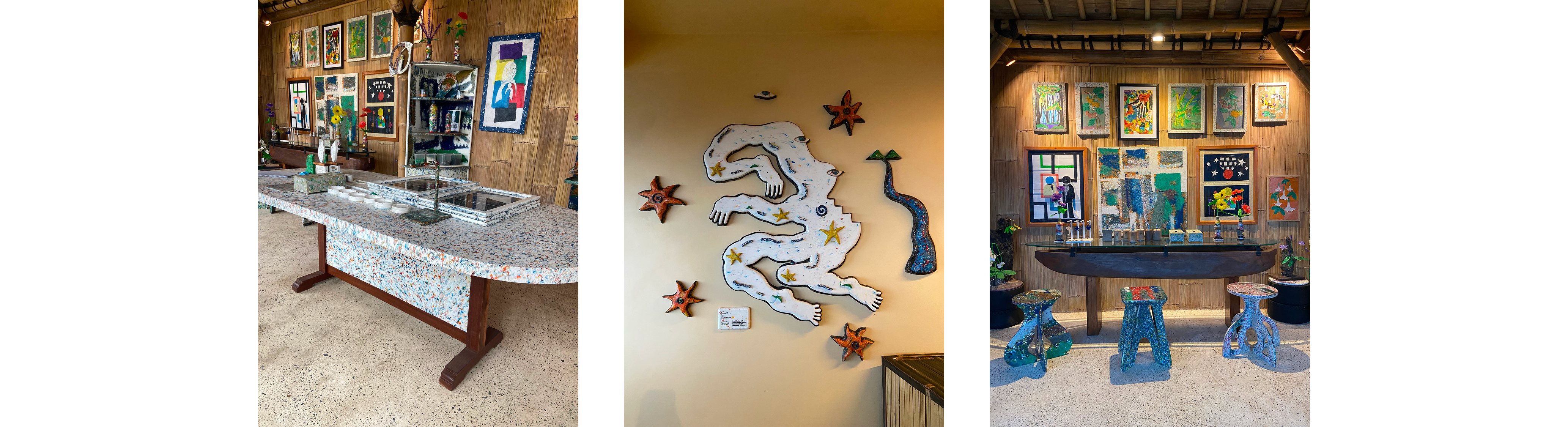
MMP integrates sustainability into the guest experience. Its “Eco Lab / Workshop Hall” — the Soap Tree Workshop Hall — serves not only as a facility for recycling but as a space where guests can participate directly. Guests can join workshops such as bamboo-straw making, soap-making from used cooking oil, recycled plastic crafts (bracelet making, handicrafts), paper upcycling, bamboo/wood carving, and other forms of sustainable craftsmanship. Munduk Moding Plantation+2Munduk Moding Plantation+2This transforms sustainability from a back-of-house operation into an interactive, educational, and memorable part of the guest stay. Guests learn to value waste differently: not as refuse, but as material that can be repurposed.
Context: Why This Matters for Bali
Bali, while known worldwide for its natural beauty and tourism industry, faces serious waste and pollution challenges. According to a recent report by a leading media outlet, roughly 52 percent of Bali’s garbage is mismanaged. As tourism recovers and expands, waste pollution — especially plastic — threatens the environment, marine life, local communities, and Bali’s reputation as a clean, beautiful destination.The Straits TimesEarlier research estimated that Bali generates around 1.6 million tonnes of waste per year, of which a substantial portion is plastic. A significant share of that leaks into waterways and ends up in the ocean. The Straits Times+1In this context, initiatives such as those implemented by MMP are more than commendable — they are essential. They show how hospitality businesses can be part of the solution by taking responsibility, not only for their own waste, but for waste generated by surrounding communities.
The Role of Wedoo Workshop Bali: Facilitating Real Change
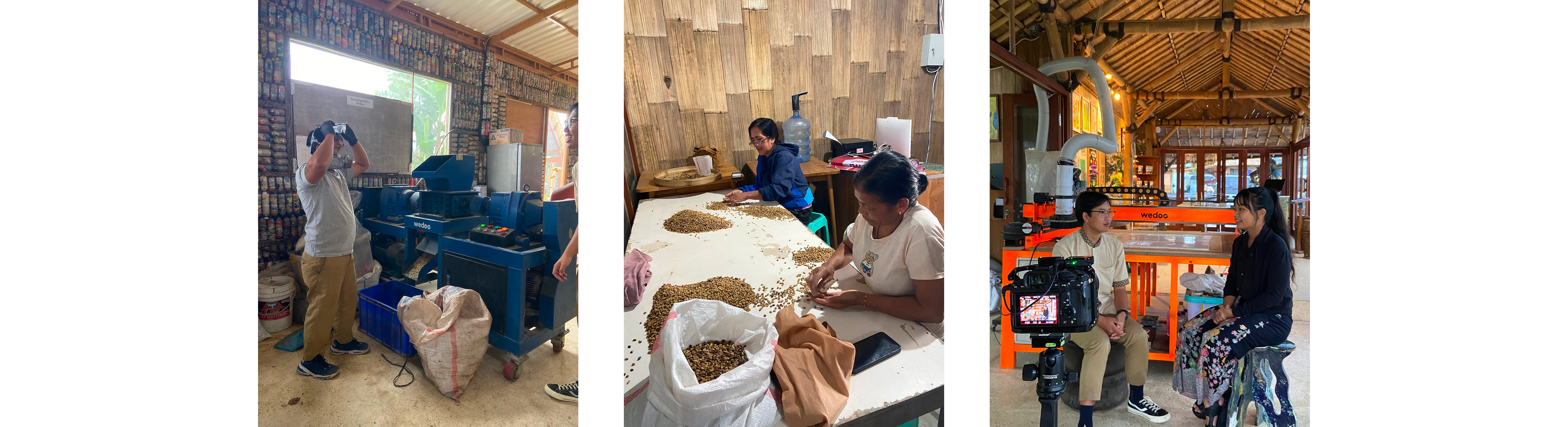
At Wedoo Workshop Bali, we believe that waste management should be practical, scalable, and community-oriented. Our collaboration with MMP demonstrates that providing the right tools — industrial shredder, sheet-press line, CNC plastics processing equipment — can allow resorts to build a circular economy system.With such systems in place, facilities can process waste from wider communities, produce functional goods on-site, reduce reliance on imports, and support social programs that benefit local residents.We consider this not simply a service — but a partnership in sustainability, community empowerment, and responsible tourism.
Invitation to the Hospitality Sector: A Call to Action
The journey of MMP offers a compelling blueprint for hotels, resorts, and hospitality businesses in Bali and beyond. Implementing serious waste management is not purely a cost. It can yield social, environmental, and reputational returns.We invite industry players to reimagine waste. Instead of seeing plastic waste as an unavoidable by-product, consider it a resource. With commitment and the appropriate infrastructure, waste becomes raw material for furniture, décor, community programs, and guest experiences.As Wedoo, we stand ready to help you build a system that turns environmental impact into positive outcomes — for your business, your guests, your community, and the planet.